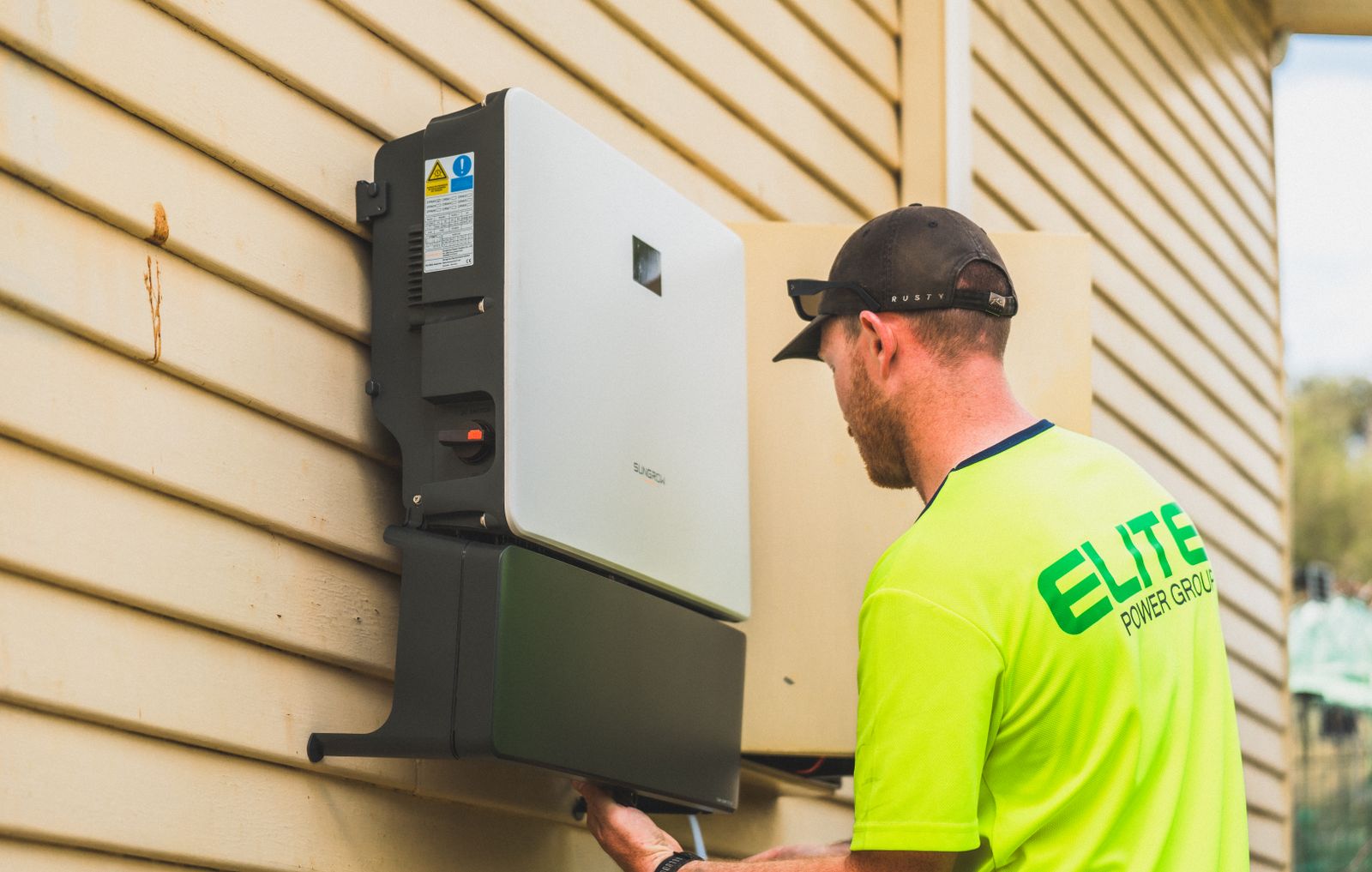
Tool 03
Backup, sized from circuits
Runtime is not a product feature, it is a division. Usable kilowatt hours over your backed up load in kilowatts. Pick the circuits and the arithmetic does the rest.
- Module13.5 kWh usable
- Continuous5 kW
- Surge10 kW
- ChemistryLFP
Before the tool
Energy and power are separate purchases
Almost every confused storage conversation comes from treating these as one number. They are not, and the difference decides what you buy.
How long you can run
Kilowatt hours are a quantity. A 13.5 kWh module carrying an average 560 W load runs about twenty four hours. The same module carrying 2.5 kW runs about five. Daily energy decides the number of modules you need and nothing else.
What you can run at once
Kilowatts are a rate. The inverter rating caps what can be on at the same instant, and the starting surge of the largest motor caps it harder. A well pump running at 1,200 W can demand 2,400 W for a second, and that second is what trips an undersized inverter.
Tool
Build your backup schedule
Tick the circuits you want live during an outage and adjust the hours. The panel on the right updates as you go and flags the cases where a bigger battery is not the answer.
Result
- 01Daily energy9.5kWh per daysum of running watts × hours, divided by 1,000
- 02Peak simultaneous draw1.07kWeverything running at once, which sets the inverter
- 03Largest starting surge1.20kWthe one motor that decides whether the inverter holds
- 04Storage required1× 13.5 kWh moduleenough to carry one full day with no generation
Running and starting watts are sample figures measured across our own installs. Your appliances will differ, which is why we take a clamp meter to every circuit before anything is quoted.
Specification
What we install
Lithium iron phosphate throughout. It gives up energy density against NMC and gains thermal stability and cycle life, which is the right trade for a box in a Carolina garage.
Full equipment comparison| Class | Usable | Continuous | Surge | Round trip | Cycles | Warranty |
|---|---|---|---|---|---|---|
| LFP wall module 13.5 kWh | 13.5 kWh | 5 kW | 10 kW | 90% | 6,000 plus | 10 yr |
| LFP stack 27 kWh | 27 kWh | 7.6 kW | 15 kW | 90% | 6,000 plus | 10 yr |
| Commercial rack 50 kWh | 50 kWh | 25 kW | 37.5 kW | 91% | 8,000 plus | 10 yr |
Round trip efficiency is the share of energy you get back out. At 90 percent, storing 10 kWh returns about 9 kWh, and that loss is already inside the runtime figures in the planner.
Measured
Eleven systems, one February outage
We pulled telemetry from the storage systems that islanded during the 2026 freezing rain event. This is what actually happened rather than what the brochure says.
Read the full write up
- 9 to 34 hoursrange of outage length across the eleven monitored sites
- 10.2 kWhmedian daily backed up energy across the schedules people chose
- 21 hoursmedian runtime on a single 13.5 kWh module before the reserve floor
- 38 percentlowest state of charge recorded on any two module site
- 6 of 11sites recharged above 70 percent on day two using their own array
- 0schedules that included a conventional central air conditioner
Questions
Storage questions
Not on its own. A grid tied inverter is required to shut down when the grid goes down, so that it cannot energise lines that a crew believes are dead. Backup needs a battery with an islanding transfer switch.
Usable kilowatt hours divided by your backed up load in kilowatts. One 13.5 kWh module carrying an 800 W average load runs about seventeen hours. The same module carrying 2.5 kW runs about five. That is why we build a load schedule instead of quoting a runtime.
Sometimes, if the service size and the transfer rating allow it and you accept the cost. Most households get better value from a critical loads subpanel that leaves the range, dryer and water heater on the unbacked side.
Yes, if you have an array. The system runs the house and recharges the battery from generation while blocking export. That is what turns a one day battery into a multi day one.
A generator gives you unlimited runtime as long as you have fuel, and it needs maintenance, fuel storage and a monthly exercise cycle. A battery is silent, instant and maintenance free but finite. Households that lose power for hours prefer batteries. Households that lose it for days in rural areas often still want a generator.
Test backup before the storm, not during it
Every storage commissioning ends with us killing the main while you watch the transfer happen. Nobody should discover how their backup behaves at two in the morning in February.
No pressure appointment. The site check is free and the design is yours to keep.