Solution
Residential solar
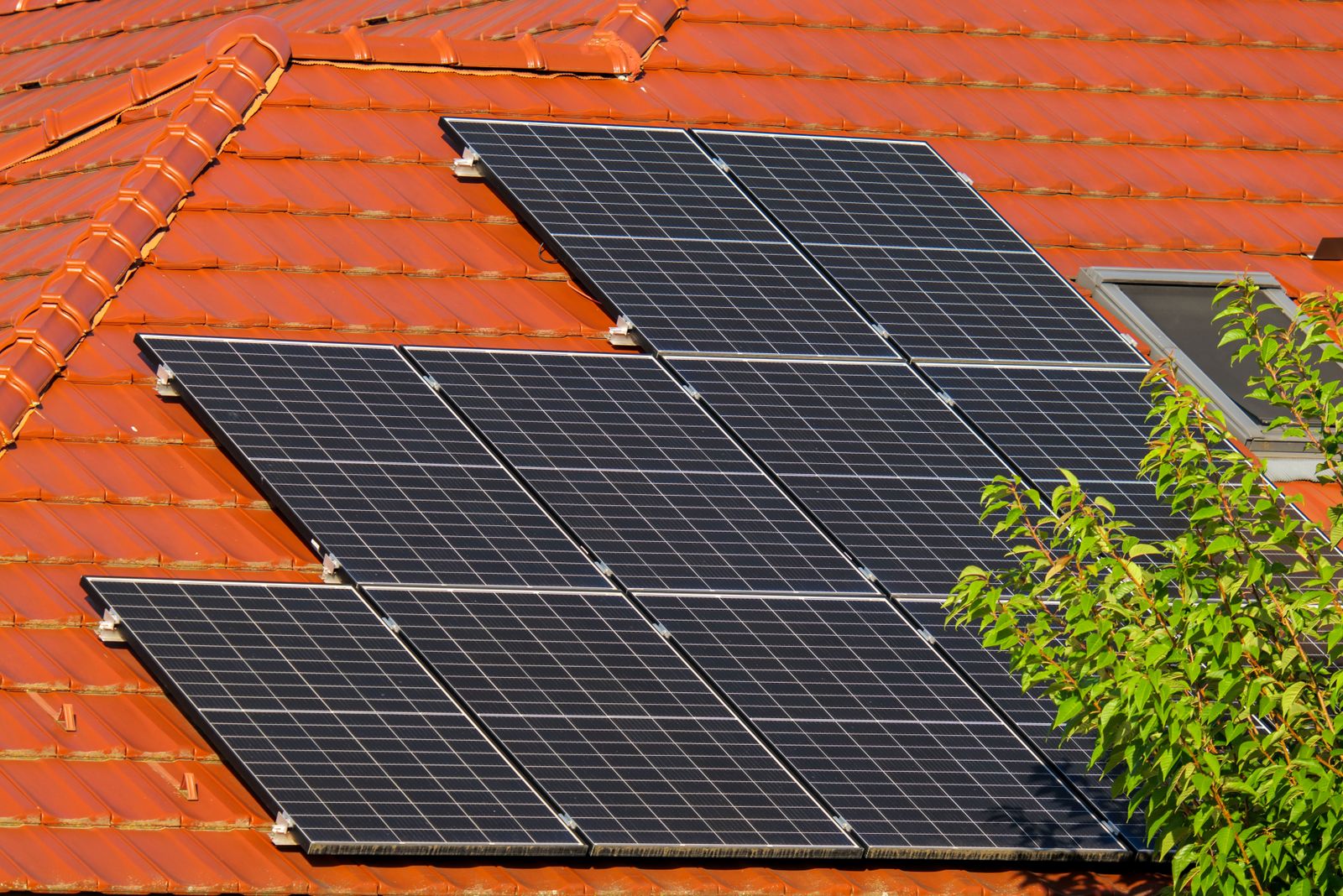
Rooftop arrays from 5 kW to 14 kW DC, designed around your last twelve utility bills.
- Specification5 to 14 kW DC · 440 W modules · string or micro
How we scope it
A residential array is sized from consumption, not from roof area. We pull twelve months of kWh from your Duke Energy Progress bills, find the annual total, and divide by the specific yield we measure for your roof plane. In the Raleigh area a well oriented, unshaded array returns roughly 1,300 to 1,400 kWh per installed kW per year (sample range from our own fleet), so a home using 12,000 kWh a year needs about 9 kW DC before we adjust for shade.
Module choice follows the roof, not the catalogue. On a compact or cut up roof we use higher efficiency modules to fit the target kW into fewer planes. On a wide simple roof we often reach the same kW with standard efficiency modules for less money per watt. Microinverters or DC optimisers go on any plane that sees partial shade, because a single shaded module on a string can drag the whole string down.
Every design is stamped, permitted with the local authority having jurisdiction, and submitted for interconnection before a single rail goes on the roof. Nothing is installed speculatively.
Scope
What is included
Six deliverables, written the way they appear on the contract rather than the way they appear in a brochure.
Twelve month load profile
We read your actual kWh by month, not an average, so summer cooling peaks and winter heat pump load are both visible in the design.
Roof plane survey
Azimuth, pitch, rafter spacing, deck condition and remaining shingle life recorded per plane, with a shade study across the full year.
Stamped electrical design
String layout, conductor sizing, overcurrent protection, rapid shutdown and the point of interconnection, sealed by a licensed PE.
Permit and interconnection
AHJ building and electrical permit plus the utility interconnection application, both filed and tracked by our desk.
Install and commissioning
Flashed penetrations into rafters, torque marked lugs, labelled disconnects, IV curve check on every string before energisation.
Monitoring handover
Panel level production visible on your phone from day one, with an alert threshold set against the modelled kWh for each month.
Sequence
How the work runs
- 1
Bill and roof review
Remote pass on imagery and your kWh history. We tell you the likely kW band before anyone visits.
- 2
Site check
Ninety minutes on site: roof, attic, service panel, meter base, and the run path for conduit.
- 3
Design and proposal
Array layout, production model by month, cost, incentive treatment and payback, all on one page.
- 4
Permit and interconnection
Two to six weeks of paperwork depending on the jurisdiction. We chase it, you do not.
- 5
Install
One to two days for most homes. Panel upgrade, if needed, adds a day.
- 6
Inspection and PTO
AHJ inspection, then utility permission to operate. The system starts exporting the day PTO lands.
Pricing factors
What moves the number
We do not publish a single price for this scope because these five variables change it substantially. Here is what each one does.
How people pay for it| Factor | Typical range | Effect |
|---|---|---|
| Array size | 5 to 14 kW DC | Driven by annual kWh and usable roof area after setbacks |
| Roof planes used | 1 to 4 | More planes means more flashing, more rail runs and more labour |
| Inverter topology | String, optimiser, micro | Shade and plane count decide this, not preference |
| Service panel | 100 A to 200 A | A 100 A panel often needs an upgrade or a supply side tap |
| Roof age | 0 to 20 years | Shingles past 15 years are usually replaced under the array first |
Questions
Residential solar: common questions
Divide your target DC watts by the module wattage. A 9 kW system using 440 W modules is 21 modules, and at roughly 21.5 sq ft per module that is about 450 sq ft of panel area. Allow 15 to 20 percent more roof than panel area for fire setbacks and walkways.
If the shingles have under ten years left, yes. Removing and reinstalling an array later costs far more than replacing the shingles under it now. We record remaining shingle life at the site check.
Output drops but does not stop. Thin overcast typically leaves 20 to 40 percent of clear sky output. Annual production models already include the Raleigh cloud record, so a grey week is not a shortfall.
No. A grid tied inverter must shut down during an outage for line worker safety. Backup requires a battery with an islanding transfer switch.
Next
Usually bought alongside
Battery storage
Stackable 13.5 kWh lithium iron phosphate units sized against your real essential loads.
OpenArchitectural shingle or standing seam · single mobilisationSolar roofing
Re-roof and array in one mobilisation, so you never pay to remove and reinstall panels.
OpenPer module telemetry · annual service · 48 hour responseMonitoring and maintenance
Module level production alerting and a scheduled service programme that catches faults early.
Open
Start with the numbers, not a sales visit
Send twelve months of kWh and a roof photo. You get a sized system, a production model and a payback figure before anyone comes out.
No pressure appointment. The site check is free and the design is yours to keep.