Solution
Solar farms
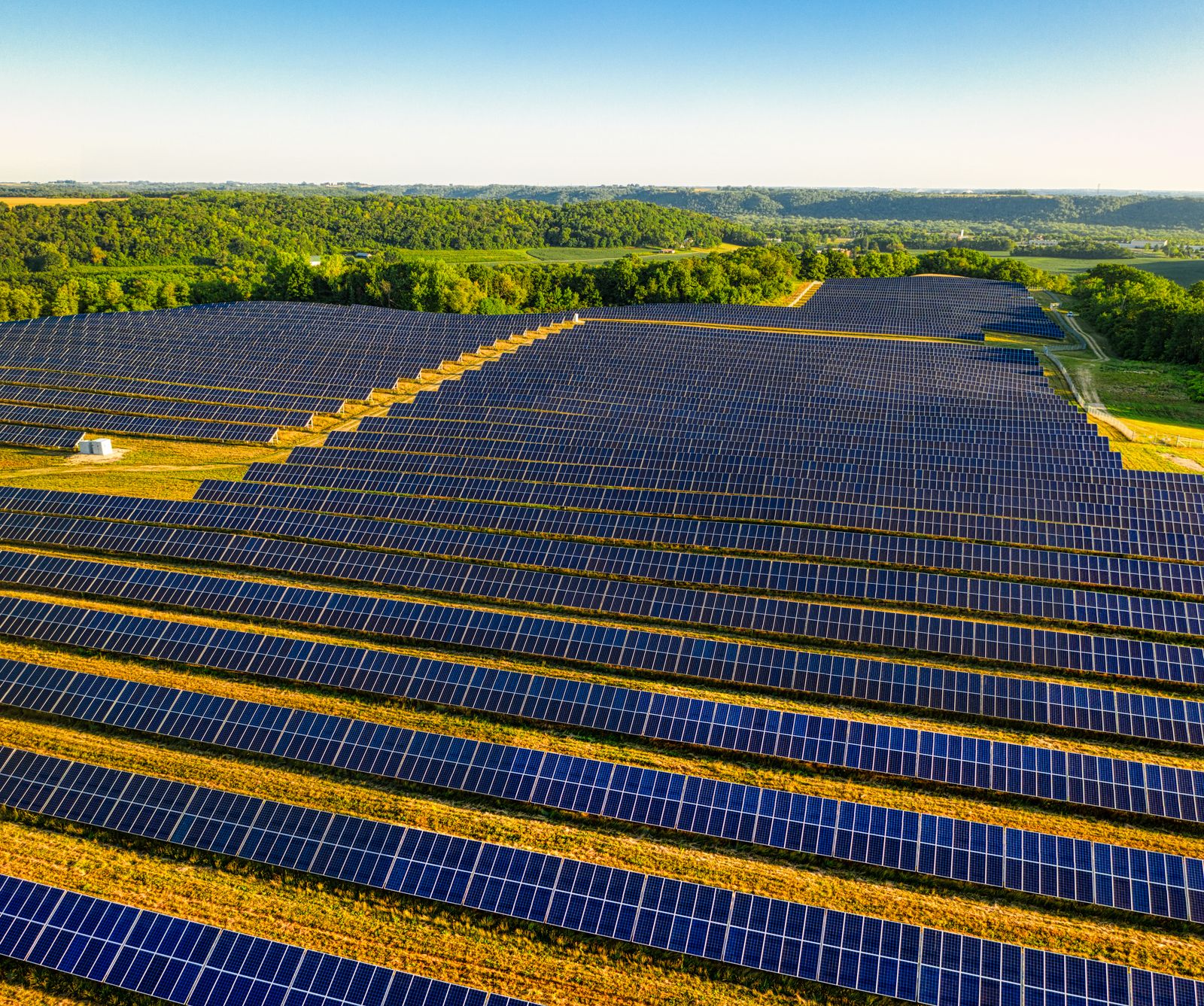
Ground mount and single axis tracker arrays on land, from 250 kW upward.
- Specification250 kW and up · fixed tilt or single axis tracker
How we scope it
Ground mounted arrays trade land for freedom. You choose the tilt, you choose the azimuth, and you are not fighting dormers, vents or a roof that faces the wrong way. In this latitude a fixed tilt near 30 degrees at true south maximises annual yield, while a shallower tilt near 20 degrees costs a little annual energy and gains wind performance and row spacing.
Single axis trackers rotate east to west through the day and lift annual yield by roughly 15 to 25 percent over fixed tilt for the same module count. They also add moving parts, a maintenance schedule and a higher cost per watt. On flat, clear acreage above about 500 kW the arithmetic often favours trackers. On small or sloping parcels it rarely does.
Land work dominates the schedule. Geotechnical borings decide pile depth and pile type. Grading, access roads, stormwater control and fencing routinely take longer than setting the modules.
Scope
What is included
Six deliverables, written the way they appear on the contract rather than the way they appear in a brochure.
Site feasibility
Solar resource, slope, soils, wetlands, setbacks, zoning and the distance to a usable point of interconnection.
Geotechnical work
Borings and pile pull tests that set foundation type: driven pile, ground screw or ballasted.
Racking selection
Fixed tilt or single axis tracker, chosen on yield modelling and total installed cost, not on preference.
Civil works
Grading, access track, stormwater measures, perimeter fencing and any required vegetative screening.
Medium voltage
Inverter stations, transformers, collection circuits and the utility interconnection equipment.
Vegetation plan
Pollinator seed mix or sheep grazing, because mowing under racking every month is a cost nobody budgets for.
Sequence
How the work runs
- 1
Parcel screen
Desktop review of resource, grid proximity and constraints before you spend anything on survey.
- 2
Interconnection
Application and study. This sets the timeline for the entire project and can take many months.
- 3
Permitting
County zoning, erosion control, and any environmental review triggered by the parcel.
- 4
Construction
Civil, piles, racking, modules, electrical and the substation work, sequenced across the season.
- 5
Commission
Capacity test against the model, then handover to the operations and maintenance contract.
Pricing factors
What moves the number
We do not publish a single price for this scope because these five variables change it substantially. Here is what each one does.
How people pay for it| Factor | Typical range | Effect |
|---|---|---|
| Acreage | 4 to 7 acres per MW | Fixed tilt at the lower end, trackers need wider row spacing |
| Racking | Fixed tilt or tracker | Trackers add 15 to 25 percent yield and real maintenance |
| Soils | Driven pile to ballast | Rock or poor bearing soils change foundation cost substantially |
| Interconnection distance | Under 1 mile preferred | Line extension cost can decide whether a parcel works at all |
| Topography | Under 10 percent slope | Steeper ground raises grading cost and complicates row layout |
Questions
Solar farms: common questions
Four to seven acres per MW AC in this region. Fixed tilt sits at the lower end. Single axis trackers need wider row spacing to avoid shading at low sun angles, so they sit at the upper end.
Above roughly 500 kW on flat open land, usually yes: 15 to 25 percent more annual kWh for a modest cost premium. Below that, and on sloping or irregular parcels, fixed tilt normally wins.
Interconnection cost, almost always. A parcel two miles from a suitable circuit can carry a line extension bill that exceeds the array itself.
We specify a low growing pollinator seed mix or arrange sheep grazing. Both beat monthly mowing under racking on cost and on soil health.
Next
Usually bought alongside
Commercial solar
50 kW to 1 MW behind the meter, modelled against demand charges as well as energy charges.
OpenPer module telemetry · annual service · 48 hour responseMonitoring and maintenance
Module level production alerting and a scheduled service programme that catches faults early.
OpenBlower door · thermal imaging · duct leakageEnergy audits
Blower door and thermal survey that often cuts the array you need before you buy it.
Open
Start with the numbers, not a sales visit
Send twelve months of kWh and a roof photo. You get a sized system, a production model and a payback figure before anyone comes out.
No pressure appointment. The site check is free and the design is yours to keep.