
Specification
Compared on the numbers
Three module classes, three inverter topologies and three storage classes, with the measurements that actually change your output rather than the ones that sell.
- Module classes3
- Best efficiency23.3 %
- Longest performance40 years
- Storage chemistryLFP only
Read this first
Six terms that decide everything
Most specification sheets are readable once you know what six numbers mean. Here they are, with the trap each one hides.
Efficiency
The share of incident sunlight the module converts to electricity. It sets how many watts fit in a square foot. It does not make a watt from one module better than a watt from another: two 440 W modules produce the same power, the more efficient one just takes less roof.
Temperature coefficient
Output falls as cells heat up. A coefficient of minus 0.29 percent per degree Celsius means a module at 55 degC cell temperature, 30 degrees above the 25 degC test condition, produces about 8.7 percent below its nameplate rating. On a July roof in Raleigh this matters more than the headline efficiency number.
Degradation
Modules lose a little output every year. A typical warranty allows around 1 to 2 percent in year one and 0.25 to 0.55 percent each year after. At 0.4 percent per year a module retains about 89 percent of its original output at year 25, which is what our 25 year savings models assume.
Product versus performance warranty
Two separate promises. The product warranty covers the physical module against defects, often 12 or 25 years. The performance warranty guarantees a minimum retained output, usually 25 to 40 years. A 25 year performance warranty on a 12 year product warranty means years 13 to 25 cover output only.
kW versus kWh
Kilowatts are a rate, kilowatt hours are a quantity. A 9 kW array is a maximum rate of generation. The 12,100 kWh it produces in a year is the quantity. A 5 kW inverter decides what you can run at once, a 13.5 kWh battery decides how long you can run it.
DC versus AC rating
Arrays are quoted in kW DC, which is the sum of the module nameplates. The inverter is rated in kW AC. A DC to AC ratio between 1.15 and 1.3 is normal and deliberate: the array rarely hits nameplate, so a slightly smaller inverter costs almost no annual energy and saves real money.
Generation
Module classes
Efficiency decides roof area, not quality. A 440 W module produces 440 W whether it is 21 percent or 23 percent efficient. The efficient one simply takes less roof to get there.
| Class | Watts | Efficiency | Temp coeff | Degradation | Yr 25 retained | Product | Performance |
|---|---|---|---|---|---|---|---|
| Mono PERC 410 W | 410 W | 21.0% | -0.35 %/°C | 0.55 %/yr | 84.8% | 12 yr | 25 yr |
| N-type TOPCon 440 W | 440 W | 22.5% | -0.29 %/°C | 0.4 %/yr | 89.4% | 25 yr | 30 yr |
| Back-contact 450 W | 450 W | 23.3% | -0.26 %/°C | 0.25 %/yr | 93.0% | 25 yr | 40 yr |
A worked example on a July roof
Cell temperature on a Raleigh roof in July commonly reaches 55 degrees Celsius, which is 30 degrees above the 25 degree test condition. A PERC module at minus 0.35 percent per degree loses about 10.5 percent of nameplate. A TOPCon module at minus 0.29 percent loses about 8.7 percent. A back contact module at minus 0.26 percent loses about 7.8 percent. Across a 9 kW array on a hot afternoon that is a difference of roughly 240 watts, every afternoon, for twenty five years.
Conversion
Inverter topologies
This is the choice shading forces on you. On one clear plane a string inverter is the correct answer and anything else is an upsell. On a shaded roof a string inverter is simply the wrong equipment.
| Topology | Rating | CEC efficiency | Warranty | Under shade | Monitoring |
|---|---|---|---|---|---|
| String inverter | 3.8 to 11.4 kW AC | 97.5% | 12 yr | A shaded module pulls down its whole string | String level only |
| String plus DC optimisers | 3.8 to 11.4 kW AC | 97.0% | 12 yr | Each module tracks its own maximum power point | Per module |
| Microinverter | 320 to 400 VA per module | 96.5% | 25 yr | Complete independence between modules | Per module |
Storage
Battery classes
Usable capacity, not nameplate. Continuous kilowatts and surge kilowatts stated separately, because those are the numbers that decide whether your well pump starts.
Size it in the planner| Class | Chemistry | Usable | Continuous | Surge | Round trip | Cycles |
|---|---|---|---|---|---|---|
| LFP wall module 13.5 kWh | Lithium iron phosphate | 13.5 kWh | 5 kW | 10 kW | 90% | 6,000 plus |
| LFP stack 27 kWh | Lithium iron phosphate, two modules | 27 kWh | 7.6 kW | 15 kW | 90% | 6,000 plus |
| Commercial rack 50 kWh | Lithium iron phosphate, rack mount | 50 kWh | 25 kW | 37.5 kW | 91% | 8,000 plus |
Cards
Scroll the full register
Swipe or use the arrows. Six classes, same measurements.
Module
Mono PERC 410 W
P-type monocrystalline PERC, 108 half cells
- Efficiency
- 21.0 %
- Temp coefficient
- -0.35 %/°C
- Degradation after yr 1
- 0.55 %/yr
- Retained at year 25
- 84.8 %
- Product / performance
- 12 / 25 yr
- Area per module
- 21.0 sq ft
Wide, simple, unshaded roofs where cost per watt matters more than area
Module
N-type TOPCon 440 W
N-type TOPCon, 108 half cells, bifacial capable
- Efficiency
- 22.5 %
- Temp coefficient
- -0.29 %/°C
- Degradation after yr 1
- 0.4 %/yr
- Retained at year 25
- 89.4 %
- Product / performance
- 25 / 30 yr
- Area per module
- 21.5 sq ft
Our default. Best balance of area, heat behaviour and warranty term
Module
Back-contact 450 W
N-type back contact, no front busbars
- Efficiency
- 23.3 %
- Temp coefficient
- -0.26 %/°C
- Degradation after yr 1
- 0.25 %/yr
- Retained at year 25
- 93.0 %
- Product / performance
- 25 / 40 yr
- Area per module
- 21.3 sq ft
Cut up or small roofs where every square foot has to earn its keep
Inverter
String inverter
One inverter, modules wired in series strings
- Rating
- 3.8 to 11.4 kW AC
- CEC efficiency
- 97.5 %
- Warranty
- 12 yr
- Under shade
- A shaded module pulls down its whole string
- Monitoring
- String level only
Cheapest per watt. Correct choice on a single unshaded plane and nowhere else.
Inverter
String plus DC optimisers
Optimiser on each module feeding one string inverter
- Rating
- 3.8 to 11.4 kW AC
- CEC efficiency
- 97.0 %
- Warranty
- 12 yr
- Under shade
- Each module tracks its own maximum power point
- Monitoring
- Per module
Middle ground. Keeps one central inverter to service while removing string mismatch.
Inverter
Microinverter
One inverter per module, AC wiring on the roof
- Rating
- 320 to 400 VA per module
- CEC efficiency
- 96.5 %
- Warranty
- 25 yr
- Under shade
- Complete independence between modules
- Monitoring
- Per module
Highest cost per watt, longest warranty, and the only sensible answer on a heavily shaded roof.
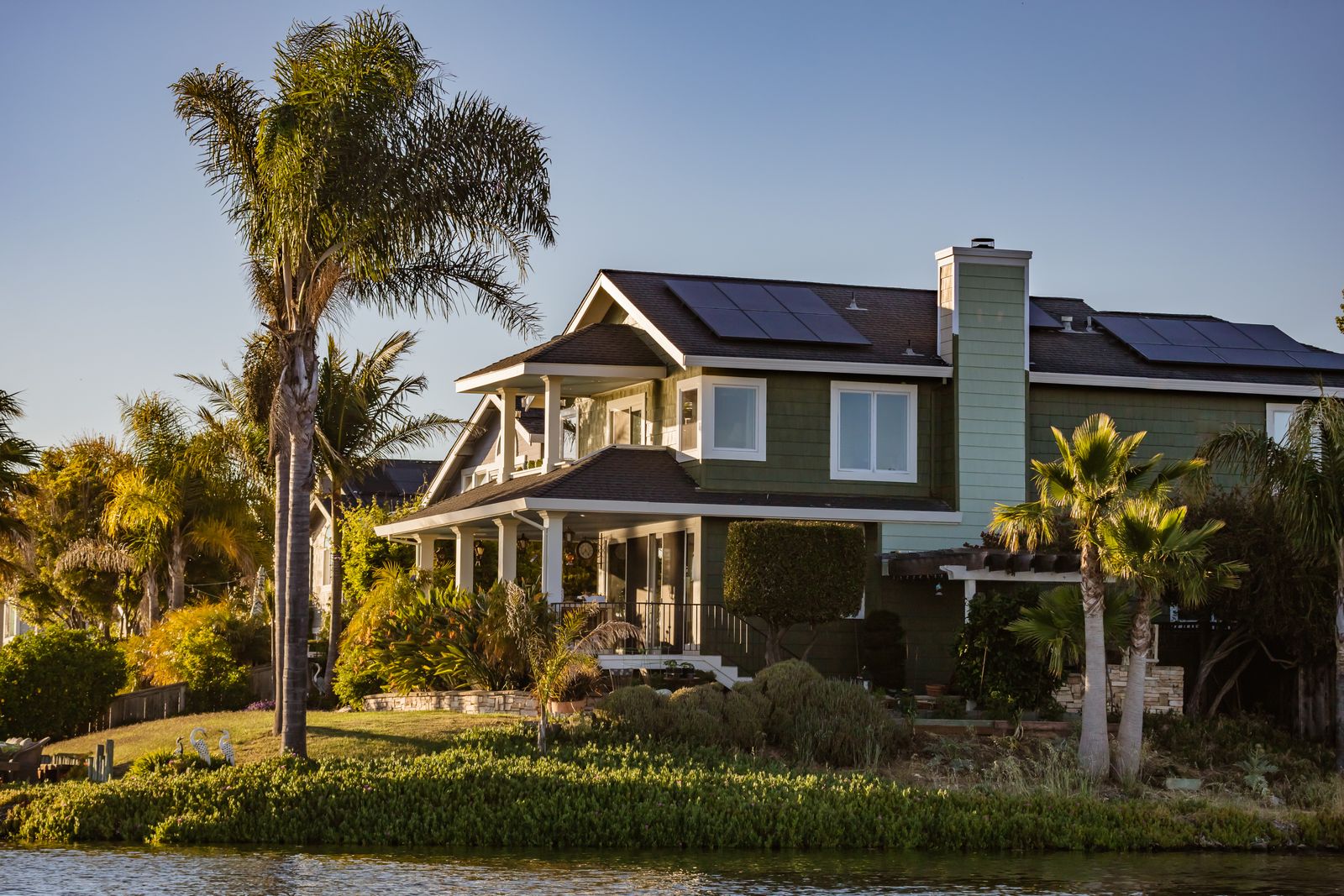
Specification follows the roof
We pick equipment after the survey, not before it. A shaded plane gets microinverters, a clear one gets a string, and a compact roof gets the efficient module. The site decides.
No pressure appointment. The site check is free and the design is yours to keep.