Solution
Commercial solar
50 kW to 1 MW behind the meter, modelled against demand charges as well as energy charges.
- Specification50 kW to 1 MW · ballasted or mechanically attached
How we scope it
Commercial bills have two halves. Energy charges are cents per kWh consumed. Demand charges are dollars per kW of the highest fifteen minute average draw in the billing period. Solar cuts the first reliably and the second only sometimes, because your peak can occur at 6 pm when the array is nearly done for the day.
So commercial modelling starts with interval data. We request fifteen minute interval data from the utility, overlay a modelled production curve, and show you the reduction in both energy and billed demand month by month. Where the demand reduction is thin, storage placed on the peak shaving schedule usually does more for the bill than another 50 kW of modules.
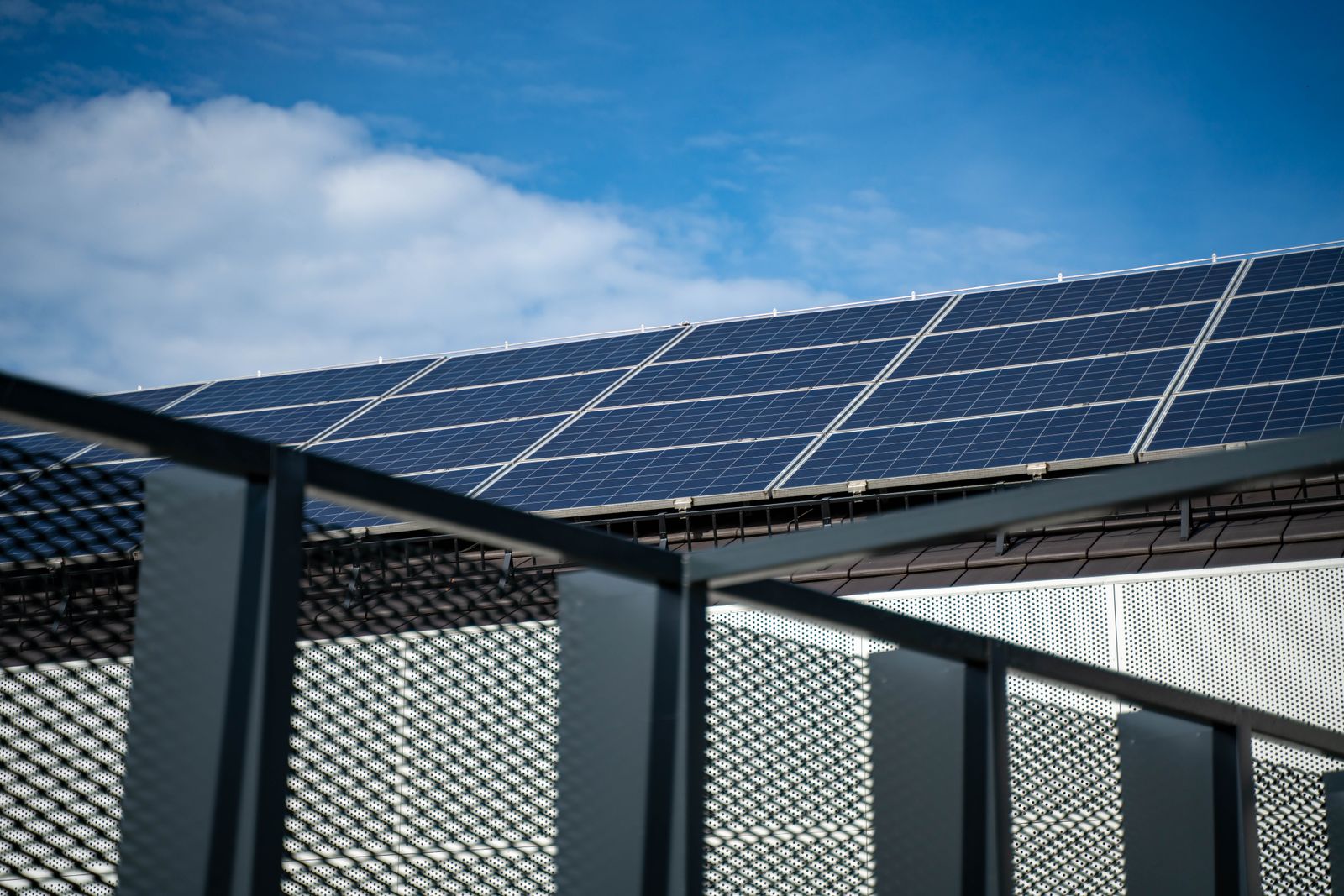
Structure decides mounting. A ballasted array on TPO adds roughly 3 to 5 lb per sq ft and needs a structural review before it goes anywhere near the roof. Standing seam metal takes clamped rails with no penetrations at all, which is the cheapest and fastest surface we work on.
Scope
What is included
Six deliverables, written the way they appear on the contract rather than the way they appear in a brochure.
Interval data analysis
Fifteen minute data pulled for twelve months and overlaid with modelled generation, hour by hour.
Structural review
A licensed structural engineer signs off on the added dead load and the uplift case before design is final.
Demand charge model
Billed kW with and without the array, and with storage on a peak shaving schedule, side by side.
Depreciation schedule
MACRS treatment and bonus depreciation laid out for your accountant, as an illustration to verify.
Construction management
One project manager, one schedule, roof warranty coordination with your existing roofer.
O and M contract
Annual thermal scan, inverter service, string level fault alerting and a published response window.
Sequence
How the work runs
- 1
Data request
Utility interval data plus twelve months of bills. We work from the meter, not from square footage.
- 2
Feasibility
Roof, ground or canopy, capacity of the service, and the honest answer on whether it pencils.
- 3
Engineering
Structural, electrical and civil as required, plus the interconnection study for larger systems.
- 4
Build
Phased so your operation keeps running. Roof work sequenced around your own trades.
- 5
Commission and report
Performance test against the model, then quarterly production reporting for the first year.
Pricing factors
What moves the number
We do not publish a single price for this scope because these five variables change it substantially. Here is what each one does.
How people pay for it| Factor | Typical range | Effect |
|---|---|---|
| System size | 50 kW to 1 MW | Capped by roof area, service capacity and interconnection limits |
| Roof type | TPO, EPDM, standing seam | Metal is cheapest to mount, ballasted membrane is heaviest |
| Structural capacity | 3 to 5 lb per sq ft added | Older bar joist roofs sometimes cannot take ballast |
| Interconnection | Simplified to full study | Above certain thresholds the utility requires a study with its own timeline |
| Demand profile | Flat to peaky | Peaky evening loads benefit far more from storage than from more modules |
Questions
Commercial solar: common questions
Partly, and only where your peak falls inside daylight. A warehouse peaking at 2 pm sees real demand reduction. A restaurant peaking at 7 pm sees almost none from solar alone and needs storage to shave it.
Roughly 8,000 to 10,000 sq ft of usable membrane for 100 kW DC once you allow for setbacks, walkways, mechanical units and the array tilt spacing that avoids row to row shading.
It can if it is mounted without the roofer involved. We bring your roofing contractor into the flashing detail before install, and on ballasted systems there are no penetrations to argue about.
For a 250 kW rooftop, expect three to five months from signed contract to energisation, most of it engineering, permitting and the interconnection review rather than construction.
Next
Usually bought alongside
Solar farms
Ground mount and single axis tracker arrays on land, from 250 kW upward.
OpenPer module telemetry · annual service · 48 hour responseMonitoring and maintenance
Module level production alerting and a scheduled service programme that catches faults early.
OpenBlower door · thermal imaging · duct leakageEnergy audits
Blower door and thermal survey that often cuts the array you need before you buy it.
Open
Start with the numbers, not a sales visit
Send twelve months of kWh and a roof photo. You get a sized system, a production model and a payback figure before anyone comes out.
No pressure appointment. The site check is free and the design is yours to keep.