Solution
Battery storage
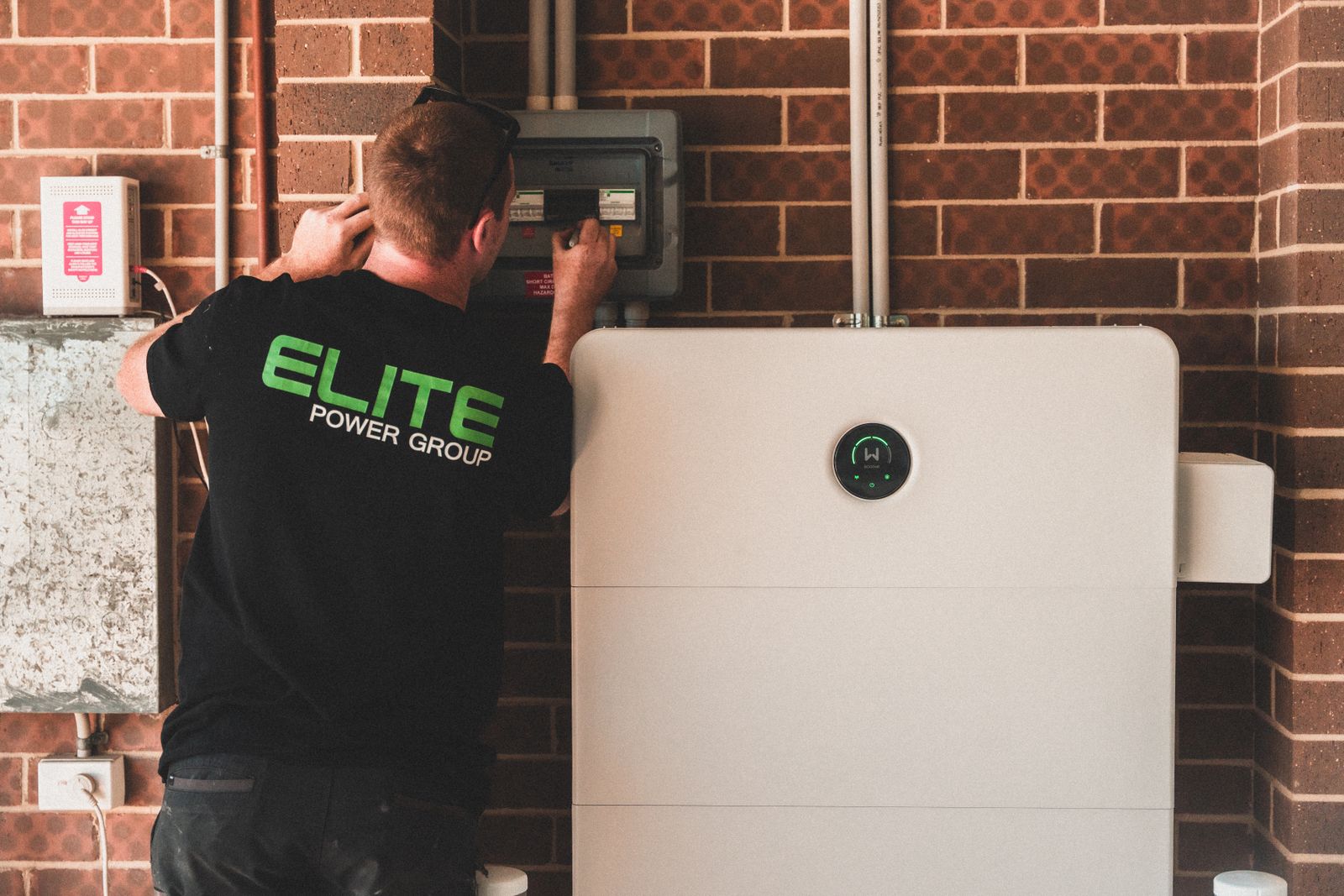
Stackable 13.5 kWh lithium iron phosphate units sized against your real essential loads.
- Specification13.5 kWh usable · 5 kW continuous · LFP chemistry
How we scope it
Storage is sized in kilowatt hours for how long you need to run, and in kilowatts for what you need to run at once. Those are two different questions and people conflate them constantly. A refrigerator draws around 150 W continuously but 1,200 W at compressor start. A 3 ton heat pump air handler with strip heat locked out draws roughly 600 W. A well pump can hit 2,400 W for a few seconds.
We build a backup load schedule with you: every circuit you want live, its running watts, its starting watts and the hours per day it runs. Daily kWh sets the number of battery modules. Peak simultaneous kW sets whether one inverter is enough. A typical Triangle household that backs up the refrigerator, well pump, internet, lighting, one mini split and outlets lands near 8 to 11 kWh per day, which one 13.5 kWh unit carries comfortably through a night and most of the next day with solar recharging.
All of our storage is lithium iron phosphate. It gives up some energy density against NMC and gains a great deal in thermal stability and cycle life, which is the right trade for a box that lives in a Carolina garage.
Scope
What is included
Six deliverables, written the way they appear on the contract rather than the way they appear in a brochure.
Backup load schedule
Circuit by circuit: running watts, starting watts, hours per day. This document decides the whole design.
Critical loads subpanel
Backed up circuits move to their own panel so the battery never tries to carry the range and the dryer.
Automatic transfer
Islanding contactor opens within milliseconds of a grid fault. Lights flicker, they do not go out.
Battery modules
13.5 kWh usable per module, stackable to three, wall or floor mounted, with a temperature managed enclosure.
Solar recharge logic
During an outage the array recharges the battery and runs the house at the same time, with export blocked.
Reserve and rate scheduling
Set a storm reserve, or charge off peak and discharge on peak if your tariff makes that worth doing.
Sequence
How the work runs
- 1
Load walk
We walk the house with a clamp meter and build the schedule from measured draw, not nameplate labels.
- 2
Sizing
Daily kWh sets module count. Peak kW sets inverter count. You see both numbers before you commit.
- 3
Panel work
Critical loads subpanel installed and circuits moved, typically one day of electrician time.
- 4
Set and commission
Battery mounted, communications bound to the inverter, reserve level set, and a live outage test performed.
- 5
Outage drill
We kill the main and watch the transfer with you standing there. Nobody should first test backup during a storm.
Pricing factors
What moves the number
We do not publish a single price for this scope because these five variables change it substantially. Here is what each one does.
How people pay for it| Factor | Typical range | Effect |
|---|---|---|
| Daily backup energy | 6 to 30 kWh | The number of loads and how long you run them |
| Peak simultaneous load | 3 to 15 kW | Decides inverter count, not battery count |
| Module count | 1 to 3 | 13.5 kWh usable each, stacked on one wall |
| Panel work | Subpanel or whole home | Whole home backup needs the service to fit behind the transfer rating |
| Location | Garage, utility room, exterior | Exterior installs need the temperature managed enclosure |
Questions
Battery storage: common questions
Divide usable kWh by your backed up load in kW. One 13.5 kWh module carrying an 800 W average load runs about 17 hours. The same module carrying a 2.5 kW load runs about 5 hours. That is why the load schedule matters more than the brochure.
A conventional 3 ton condenser pulling 3.5 kW will drain a single module in under four hours. A variable speed mini split running at 600 W is realistic. We usually back up one zone rather than the whole system.
kW is rate, kWh is quantity. The inverter rating in kW decides how much you can run at the same instant. The battery rating in kWh decides how long you can run it. A big battery behind a small inverter still trips on startup surge.
On its own, usually not on a Duke residential tariff today. It is bought for outage resilience. Where time of use spreads are wide, arbitrage recovers part of the cost. We show both cases honestly in the proposal.
Next
Usually bought alongside
Residential solar
Rooftop arrays from 5 kW to 14 kW DC, designed around your last twelve utility bills.
OpenLevel 2 · 40 A to 80 A circuit · 7.7 to 19.2 kWEV chargers
Level 2 charging on a properly sized circuit, with load management when the panel is tight.
OpenPer module telemetry · annual service · 48 hour responseMonitoring and maintenance
Module level production alerting and a scheduled service programme that catches faults early.
Open
Start with the numbers, not a sales visit
Send twelve months of kWh and a roof photo. You get a sized system, a production model and a payback figure before anyone comes out.
No pressure appointment. The site check is free and the design is yours to keep.