Design
Shade is a number, not an opinion
Total solar resource fraction turns a conversation about trees into arithmetic you can check. Here is how we measure it and when we say no.
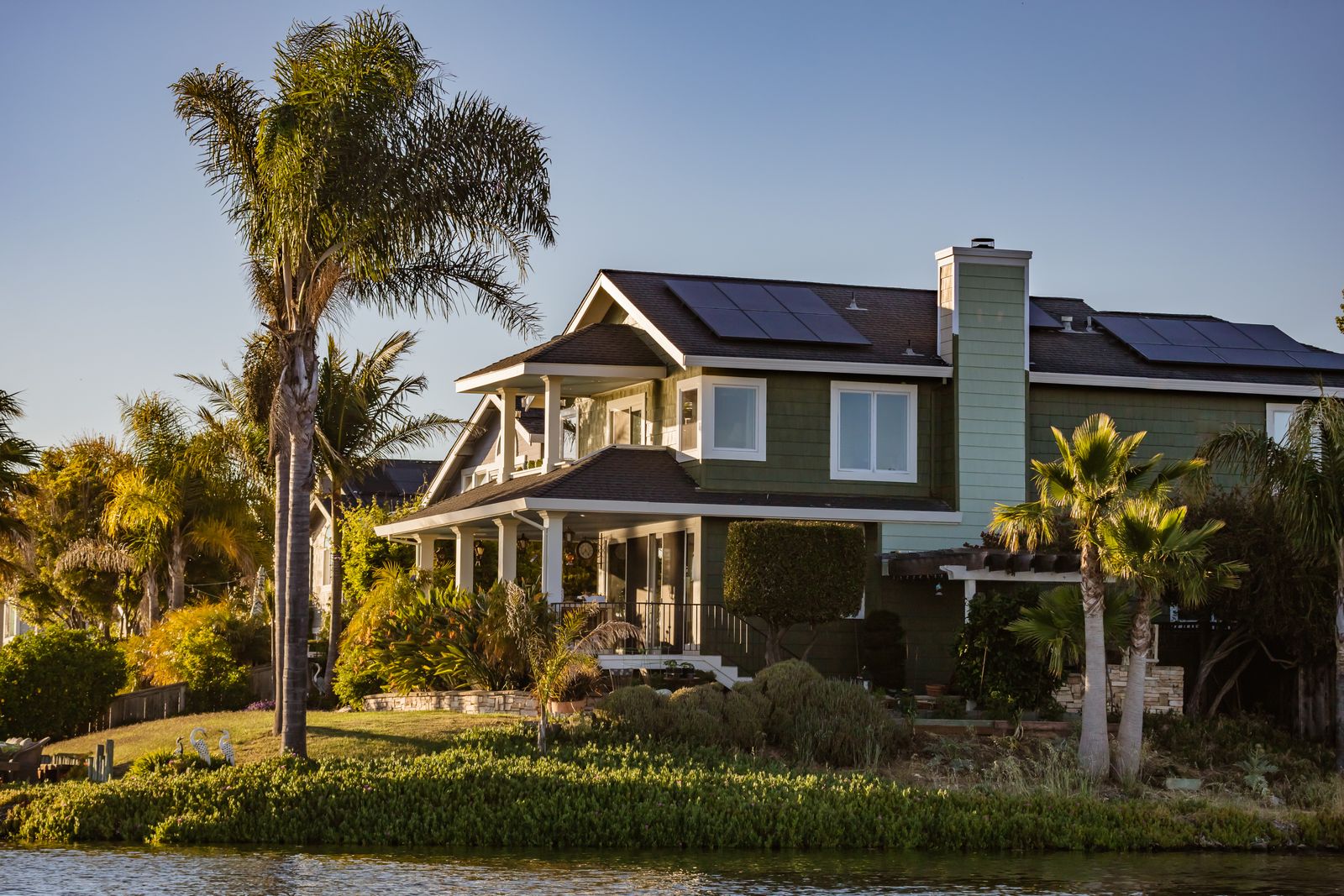
Everyone with a wooded lot has been told two contradictory things: that their trees make solar impossible, and that modern panels handle shade fine. Neither is true, and the disagreement exists because almost nobody puts a number on it.
The number is total solar resource fraction, usually shortened to TSRF. It expresses the share of the ideal annual irradiance a given roof plane actually receives after obstructions are accounted for. A plane at 100 percent has a clear view of the sky through the whole solar window. A plane at 70 percent loses nearly a third of its potential to shade.
How we measure it
We take a fisheye sky image from several points on each roof plane and overlay the annual sun path for this latitude. Every obstruction that intersects the path costs a measurable slice of irradiance, weighted by how much energy that part of the sky actually delivers.
That weighting is the part people miss. An obstruction due north costs almost nothing here, because the sun is never there. An obstruction to the south at 30 degrees elevation costs enormously, because that is where the winter sun lives. Two trees of identical size on different sides of a house have completely different consequences.
We repeat the assessment for deciduous cover in both leaf on and leaf off condition. A bare oak still costs roughly 20 to 30 percent of the irradiance a leafed oak does, which is why the winter dip is real but far smaller than summer shading would suggest.
What the numbers mean in practice
- Above 90 percent: an unshaded plane. Design normally, string inverter is viable.
- 80 to 90 percent: light shading, usually morning or late afternoon. Optimisers or microinverters recommended.
- 70 to 80 percent: meaningful loss. Still viable, but the cost per produced kilowatt hour rises and you should see it in writing.
- Below 70 percent: we normally decline the plane. The money buys more production somewhere else on the roof, or it should not be spent.
Why module level electronics matter here
Modules wired in a series string share a current. A shaded module restricts that current, and without bypass mechanisms it drags its neighbours down with it. Bypass diodes limit the damage, but on a string of fourteen modules with three regularly shaded, the loss is far greater than three fourteenths.
Optimisers and microinverters break that coupling. Each module tracks its own maximum power point, so a module at 40 percent output costs you 60 percent of one module and nothing else. On a plane between 70 and 90 percent TSRF that difference is usually worth several hundred kilowatt hours a year, which is why we do not offer a string design on a shaded roof at any price.
On a shaded plane, the microinverter premium is not an upsell. A string design there is simply the wrong equipment.
The tree removal question
People ask whether they should cut the trees. Occasionally that is the right answer, most often it is not, and frequently it is not even available: the offending trees are on a neighbouring lot, or protected by a local ordinance.
When the trees are yours and removal is legal, we still model both cases before anyone calls an arborist. A removal that lifts a plane from 74 to 91 percent might add 1,800 kWh a year. Against the cost of removing two mature hardwoods, that is a long payback on its own, and the shade will partially return as surrounding growth fills in.
More often the right answer is a smaller array on the clear plane. One of our Chapel Hill projects ended at 5.7 kW rather than the 9 kW the owner asked for, on the single plane measuring 89 percent. Cost per modelled kilowatt hour came out about 19 percent better than the larger design.
What to ask your installer
Ask for TSRF per plane, in writing, with the measurement method named. Ask what happens to the number in December. Ask which planes were rejected and why. An installer who has genuinely surveyed your roof can answer all three in a minute.
If the response is that the panels handle shade fine, you are talking to someone who has not measured anything.
More notes
Related reading
kW or kWh: the unit mistake that ruins solar quotes
Rate and quantity are different things. Mixing them up is how people end up with a battery that cannot start their well pump.
Read itStorageWhat one battery actually runs during a Triangle ice storm
We pulled telemetry from eleven of our storage systems through a 2026 winter outage. Here is what the numbers show.
Read itBuyingReading a solar proposal: eleven numbers that decide whether it is honest
Most proposals are designed to be skimmed. Here is what to look for line by line, including the figures that are quietly missing.
Read it